OpenETR
Overview
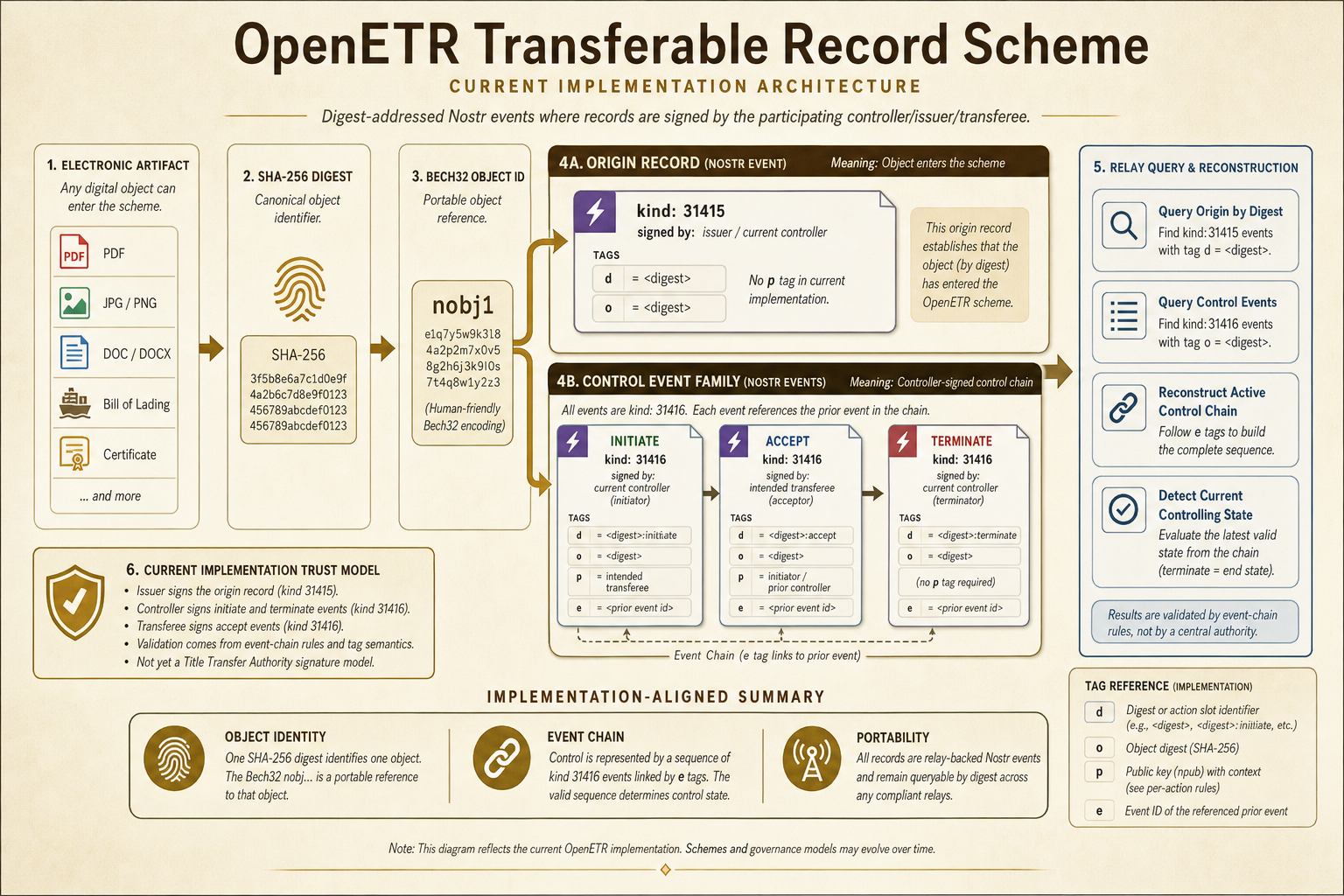
This overview illustrates the OpenETR transferable record scheme: a file or electronic artifact is reduced to a stable digest, represented as a portable object identifier, and then tracked through Nostr events that express current title and the control-transfer chain.
The model is designed to keep object identity stable, make title state queryable, and preserve a verifiable chain of control using signed relay-backed records.
Relay-Backed Architecture
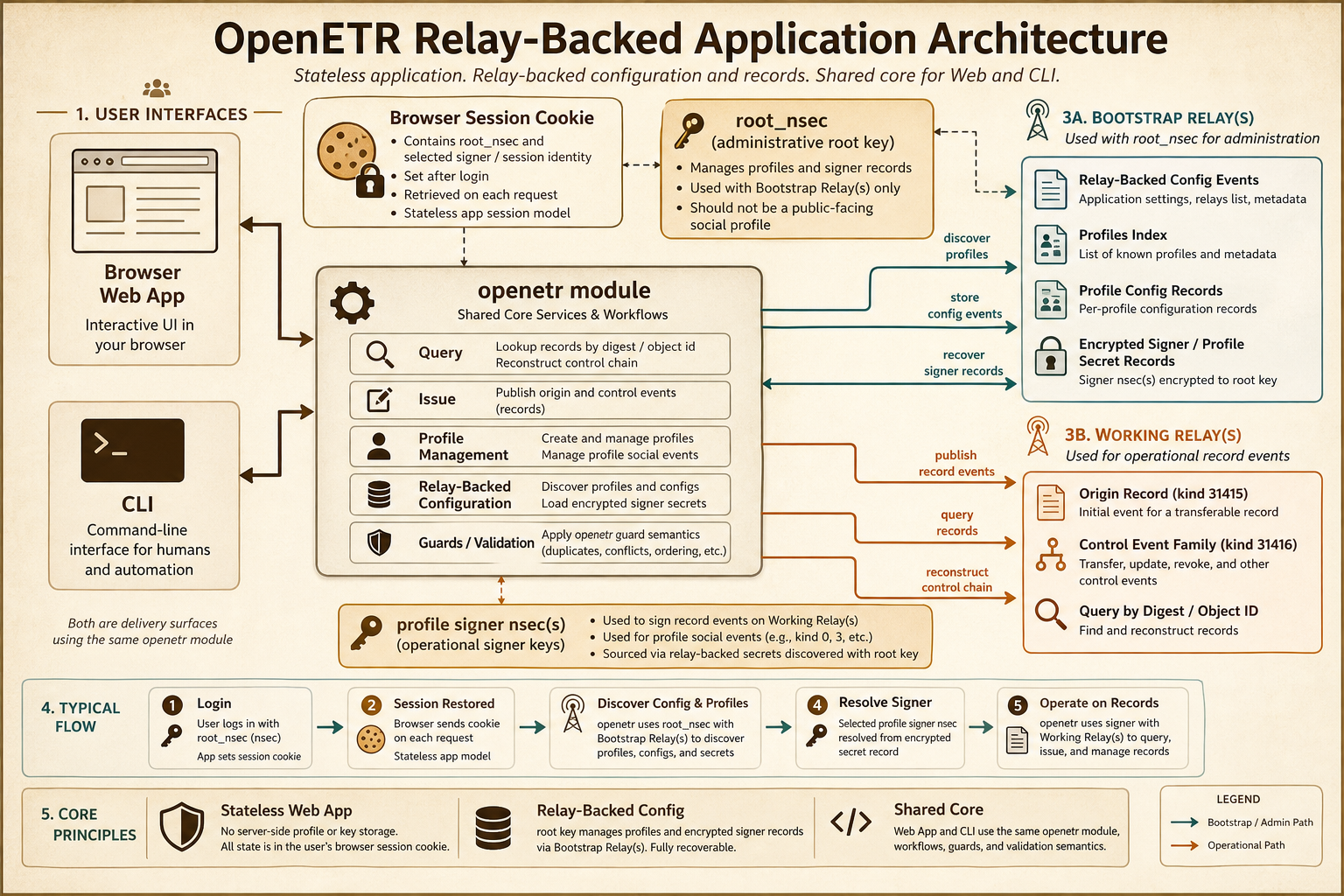
OpenETR is also organized as a relay-backed application architecture. The web app and CLI both call the same
openetr module, while the root key and bootstrap relays are used to discover profile records,
relay-backed configuration, and signer secrets. Operational record publishing and querying then happen on the
working relays using the selected profile signer.
This keeps the application stateless at the server layer while still allowing profiles, signer material, and record workflows to be reconstructed from relays. The diagram below shows how the browser session, root key, bootstrap relays, working relays, and shared core fit together.